Chapter 2: Strategy, Technology, and Competitive Advantage
Competitive Advantage vs Sustainable Competitive Advantage
A firm has a competitive advantage when it is able to create more value than its competitors, either by offering lower costs or delivering greater benefits to customers. However, many advantages disappear quickly because competitors can copy technology, match features, or reduce prices. Sustainable competitive advantage exists when a firm’s performance advantage persists over time because rivals cannot easily imitate the resources supporting it.
Why this matters: Managers must evaluate whether an advantage comes from temporary improvements or from resources competitors cannot replicate, such as brand strength, switching costs, economies of scale, or network effects.
Example: Snapchat introduced Stories first, but Instagram quickly copied the feature and leveraged its larger user base to sustain stronger long-term competitive advantage.
Operational Effectiveness vs Strategic Positioning
Operational effectiveness means performing the same activities as competitors but doing them faster, cheaper, or more efficiently. Strategic positioning means performing different activities from competitors or performing similar activities in unique ways that competitors cannot easily replicate.
Why this matters: Technology that only improves efficiency rarely produces long-term advantage because competitors can copy it. Sustainable advantage comes from designing systems that support a unique way of delivering value.
Example: Southwest Airlines achieves advantage not just through efficiency but by structuring its operations around short-haul routes, fast gate turnaround, and a single aircraft model.
The Fast Follower Problem
The fast follower problem occurs when competitors quickly imitate an innovation and enter the market with similar or improved products at lower cost. Because most technologies can be copied, being first to market does not guarantee long-term success unless firms use their lead time to build strategic resources.
Why this matters: Firms must convert early technological advantages into harder-to-copy assets such as switching costs, brand recognition, scale advantages, or network effects before competitors catch up.
Example: Facebook copied Snapchat’s Stories feature and integrated it across Instagram and WhatsApp, limiting Snapchat’s ability to maintain its early lead.
Porter’s Five Forces Framework
Porter’s Five Forces framework explains how industry structure influences profitability by analyzing rivalry among existing competitors, the threat of new entrants, the threat of substitute products, and the bargaining power of suppliers and buyers. The framework helps managers understand how competition affects long-term industry attractiveness.
Why this matters: Technology can strengthen or weaken each force by increasing price transparency, lowering entry barriers, raising switching costs, or introducing substitutes that change how firms compete.
Example: Streaming platforms such as Netflix increased substitute pressure on cable television and shifted bargaining power toward consumers through flexible subscription pricing.
Barriers to Entry
Barriers to entry are obstacles that make it difficult for new firms to enter a market or compete effectively after entering. Even when launching a digital product is easy, sustaining success requires building resources that competitors cannot easily replicate.
Why this matters: Strong entry barriers protect incumbent firms by limiting competition and allowing them to maintain higher profitability over time.
Example: Google’s large-scale infrastructure, brand recognition, and accumulated search data make it extremely difficult for new search engines to compete effectively.
Switching Costs
Switching costs are the financial, learning, time, contractual, or data-related costs customers face when changing from one product or service to another. Technology platforms often increase switching costs by encouraging users to store data and integrate services across systems.
Why this matters: High switching costs reduce customer turnover and protect firms from competitors offering slightly better products or lower prices.
Example: Users who store files in Apple iCloud or Google Drive are less likely to switch platforms because transferring data requires time and effort.
Network Effects
Network effects occur when a product becomes more valuable as more users adopt it. Larger user bases attract additional participants, developers, and complementary services, reinforcing platform dominance.
Why this matters: Strong network effects often create winner-take-most markets where smaller competitors struggle to attract users even when their technology is similar.
Example: Social media platforms such as Instagram become more valuable as more friends and creators join the network.
Economies of Scale
Economies of scale occur when a firm’s average cost decreases as production volume increases. Technology firms benefit strongly from scale because infrastructure investments can support large numbers of users at relatively low additional cost.
Why this matters: Large firms can spread fixed costs across more customers, making it difficult for smaller competitors to match their pricing.
Example: Amazon’s fulfillment network allows it to deliver products faster and at lower cost than smaller online retailers.
The Value Chain
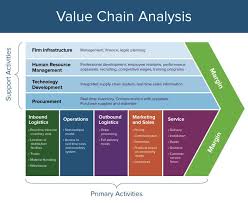
The value chain describes the set of activities through which a firm creates and delivers products or services to customers. Primary activities include inbound logistics, operations, outbound logistics, marketing and sales, and service, while support activities include infrastructure, human resource management, technology development, and procurement.
Why this matters: Technology strengthens coordination across value chain activities and helps firms create systems competitors cannot easily replicate.
Example: Zara’s integrated supply chain allows it to design, manufacture, and deliver clothing faster than traditional retailers.
Chapter 2 Vocabulary
Barriers to entry are obstacles that make it difficult for new firms to enter an industry or compete effectively after entering.
Why this matters: Strong entry barriers protect incumbents from competition and help sustain long-term profitability.
Example: Google’s infrastructure scale and accumulated search data discourage new search engine competitors.
A brand represents the reputation and perceived value associated with a company’s products or services.
Why this matters: Strong brands reduce customer uncertainty and increase loyalty, making competitors harder to substitute.
Example: Many customers search directly on Amazon instead of comparing multiple retailers.
A business process is a structured set of activities designed to accomplish a specific organizational objective.
Why this matters: Unique or optimized business processes can become difficult-to-imitate sources of competitive advantage.
Example: Zara’s rapid inventory replenishment process allows faster response to fashion trends.
Capital intensity refers to the level of financial investment required to compete in an industry.
Why this matters: High capital requirements discourage new competitors from entering a market.
Example: Semiconductor manufacturing requires billions of dollars in infrastructure investment.
A commodity is a product that is nearly identical across sellers and therefore competes primarily on price.
Why this matters: Commodity markets reduce opportunities for differentiation and force firms into price competition.
Example: Basic cloud storage services often compete mainly on price rather than features.
Competitive advantage exists when a firm creates more value than its competitors through lower costs or differentiated offerings.
Why this matters: Firms must determine whether their advantage is temporary or supported by resources competitors cannot easily copy.
Example: Apple differentiates products through ecosystem integration across devices.
Differentiation occurs when a firm offers features customers perceive as unique and valuable compared to competitors.
Why this matters: Differentiation allows firms to avoid competing only on price and maintain stronger margins.
Example: Apple differentiates through hardware–software integration and user experience.
Distribution channels are the pathways through which products or services reach customers.
Why this matters: Control over distribution limits competitors’ ability to access customers efficiently.
Example: Netflix distributes content directly through its streaming platform instead of cable providers.
Economies of scale occur when average production costs decrease as output increases.
Why this matters: Large firms spread fixed costs across more customers, making competition harder for smaller entrants.
Example: Amazon’s logistics network lowers delivery cost per package as volume increases.
The fast follower problem occurs when competitors quickly imitate an innovation and enter the market with comparable offerings.
Why this matters: First movers must build scale, brand, or switching costs before competitors replicate their technology.
Example: Instagram copied Snapchat’s Stories feature and expanded it to a larger user base.
Human resource management involves recruiting, training, and developing employees within an organization.
Why this matters: Skilled employees and organizational culture can become strategic assets competitors cannot easily replicate.
Example: Google invests heavily in hiring and retaining engineering talent.
Inbound logistics refers to receiving, storing, and managing inputs from suppliers.
Why this matters: Efficient supplier coordination reduces costs and improves production speed.
Example: Toyota’s just-in-time inventory system improves inbound logistics efficiency.
An incumbent is an established firm already operating within an industry.
Why this matters: Incumbents often benefit from brand recognition, switching costs, and scale advantages that protect them from new entrants.
Example: Microsoft remains an incumbent leader in enterprise operating systems.
Metrics are measurable indicators used to evaluate organizational performance.
Why this matters: Managers rely on metrics to determine whether strategies improve efficiency and competitive position.
Example: Customer retention rate is a key metric for subscription platforms.
Network effects occur when a product becomes more valuable as more users adopt it.
Why this matters: Strong network effects can create dominant platforms that competitors struggle to challenge.
Example: LinkedIn becomes more useful as more professionals join the network.
Operational effectiveness means performing the same activities as competitors but more efficiently.